


Gqeberha (Nelson Mandela Bay): TECHz -News Desk
Access to practical science education remains a critical hurdle in South Africa. According to the National Education Infrastructure Management System Standard Report, only about 18% of ordinary public schools across the country possess fully equipped science laboratories.
To bridge this infrastructural gap, corporate partnerships and educational trusts are deploying mobile science laboratories to bring hands-on Science, Technology, Engineering, and Mathematics (STEM) learning directly to disadvantaged communities.
Mobile labs offer a cost-effective and highly scalable solution for rural and peri-urban schools. By traveling daily between multiple schools, these units maximize the reach of specialized scientific apparatus and expert facilitators. A primary initiative driving this transformation is the Science2Go Mobile Resource Centre. Spearheaded by the Centre for the Advancement of Science and Mathematics Education Trust and Mahle Behr, with funding from the Ford Motor Company Fund, this project utilizes a custom-built Ford Ranger.
The initiative targets thousands of learners in Gqeberha and the broader Nelson Mandela Bay area with the explicit goal of improving physical science enrollment and performance by 20% in participating schools. Other notable nationwide projects include Merck’s Curiosity Cube, a retrofitted shipping container bringing interactive artificial intelligence experiments to students, and the Sasol Inzalo Foundation, which has donated state-of-the-art mobile labs to empower local science centers in conducting live chemistry and physics demonstrations.
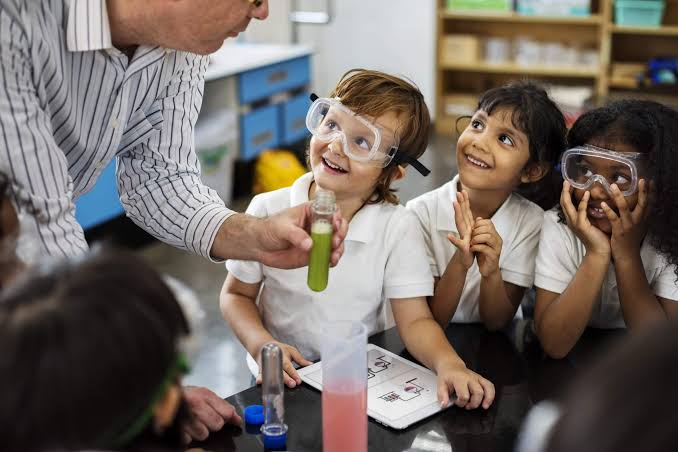
The integration of these mobile laboratories is designed to shift learning from theoretical memorization to practical application. By providing access to tangible resources, these programs enhance conceptual understanding, allowing learners to see and touch science equipment to solidify complex physics and chemistry concepts. Exposure to modern scientific fields addresses the barrier many students face in envisioning themselves as future scientists, sparking lasting career interests.
Because mobile lab visits are often paired with teacher training programs, they also increase educator confidence in delivering impactful, practical science lessons. Through sustained investments from the private sector and academic institutions, mobile laboratories are actively mitigating school bottlenecks and strengthening the foundational vocational skills pool needed for South Africa’s future economic growth.
