Pretoria: TECHz – Ashraf Gaber
Sudden power outages and fragile energy infrastructure have long served as a “silent killer” across hospitals and medical centers worldwide, particularly throughout Africa. In intensive care units and ambulances, a single second without electricity can cost the life of a patient relying on mechanical ventilation.
Yet, amid these challenges, and during my coverage of the WHX World Health Expo held in Johannesburg from October 6 to 8 an ingenious solution caught my attention, redefining emergency respiratory care: a mechanical ventilator requiring no electrical power source whatsoever.
Technology Meets Simplicity
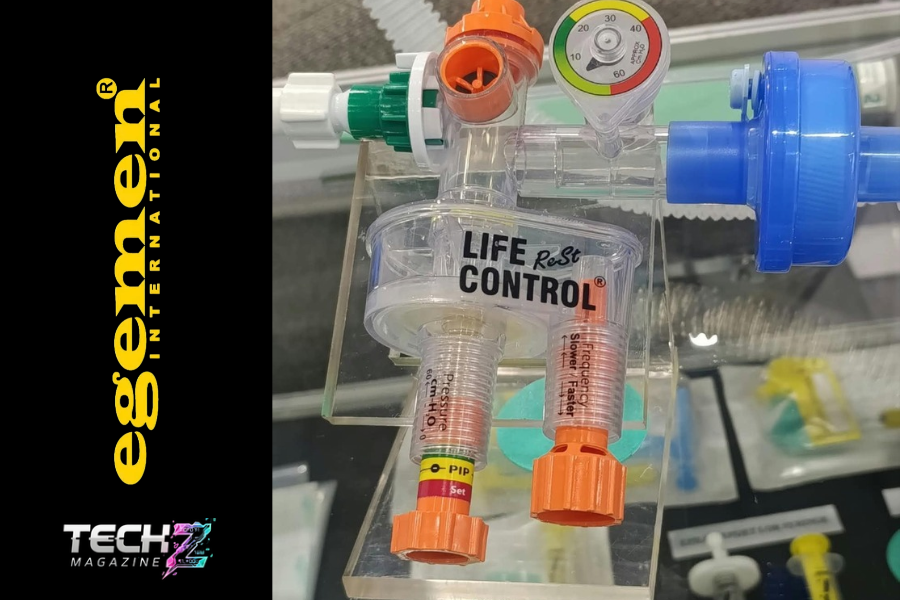
At first glance, the “Life Control” ventilator, manufactured by the Turkish firm Egemen International, appears to be a simple assembly of plastic parts, or perhaps even a toy to the untrained eye. However, this device, weighing a mere 105 grams, carries profound significance and remarkable life-saving capability.
Engineered to closely mimic the mechanics of the human lung, the device is designed for patients suffering from respiratory arrest or an inability to breathe spontaneously. What makes it genuinely revolutionary is its total independence from electrical outlets and batteries.
Engineered for Disaster Scenarios
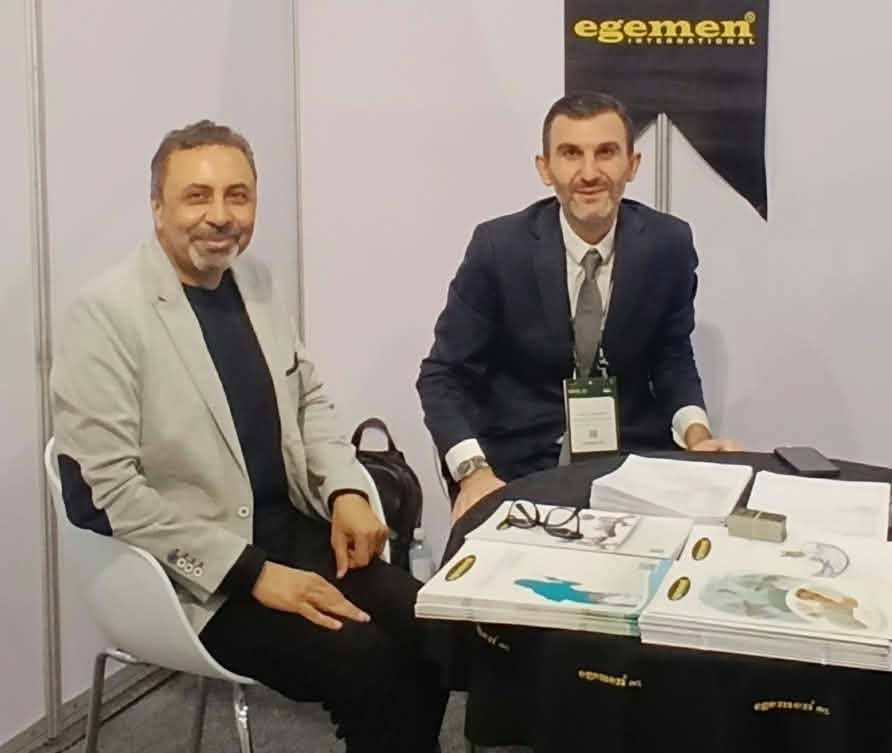
In an exclusive interview regarding the innovation, Ismail Yanasavur, International Trade Manager at Egemen International, explained: “The device requires neither power nor maintenance. In any disaster scenario, it is the ideal solution.”
The unit is entirely pneumatic, powered exclusively by oxygen pressure. Describing its ease of use, Yanasavur noted: “You simply connect the tubing to an oxygen reservoir, a portable cylinder, or directly to a central hospital oxygen line, and it is immediately ready to initiate ventilation.” The device operates at peak efficiency with a minimum pressure of 2.5 bar and an oxygen flow rate of just 8 liters per minute.
Rare Technology Addressing Africa’s Infrastructure Gaps
Yanasavur highlighted the global rarity of this technology, stating that “worldwide, only two manufacturers produce this type of device, and ours is one of them.”
The significance of this breakthrough is amplified across African nations and remote regions grappling with persistent grid instability. In environments where power failures have claimed countless lives due to delayed emergency care, the device offers a sustainable, robust solution for emergency medical services (EMS) and patient transport.
MRI-Compatible Design
Beyond its electrical independence, the device provides a major clinical advantage. Built with specialized internal non-magnetic springs and components, it is entirely safe for use within Magnetic Resonance Imaging (MRI) environments.
“In an emergency department, if you need to transfer a patient into an MRI suite, there is no need to switch to an expensive specialized MRI-compatible electronic ventilator; you can simply use this device,” Yanasavur added.
Concluding his remarks, Yanasavur captured the core philosophy driving the innovation: “For the past forty years, our primary focus has been human life and health, and this device will make a substantial difference.”
Medical innovations that prioritize elegant, practical engineering to overcome severe infrastructural constraints represent more than just technological progress, they offer a vital lifeline for healthcare systems across emerging markets and the African continent.