


Johannesburg: TECHz – Anita Bosman
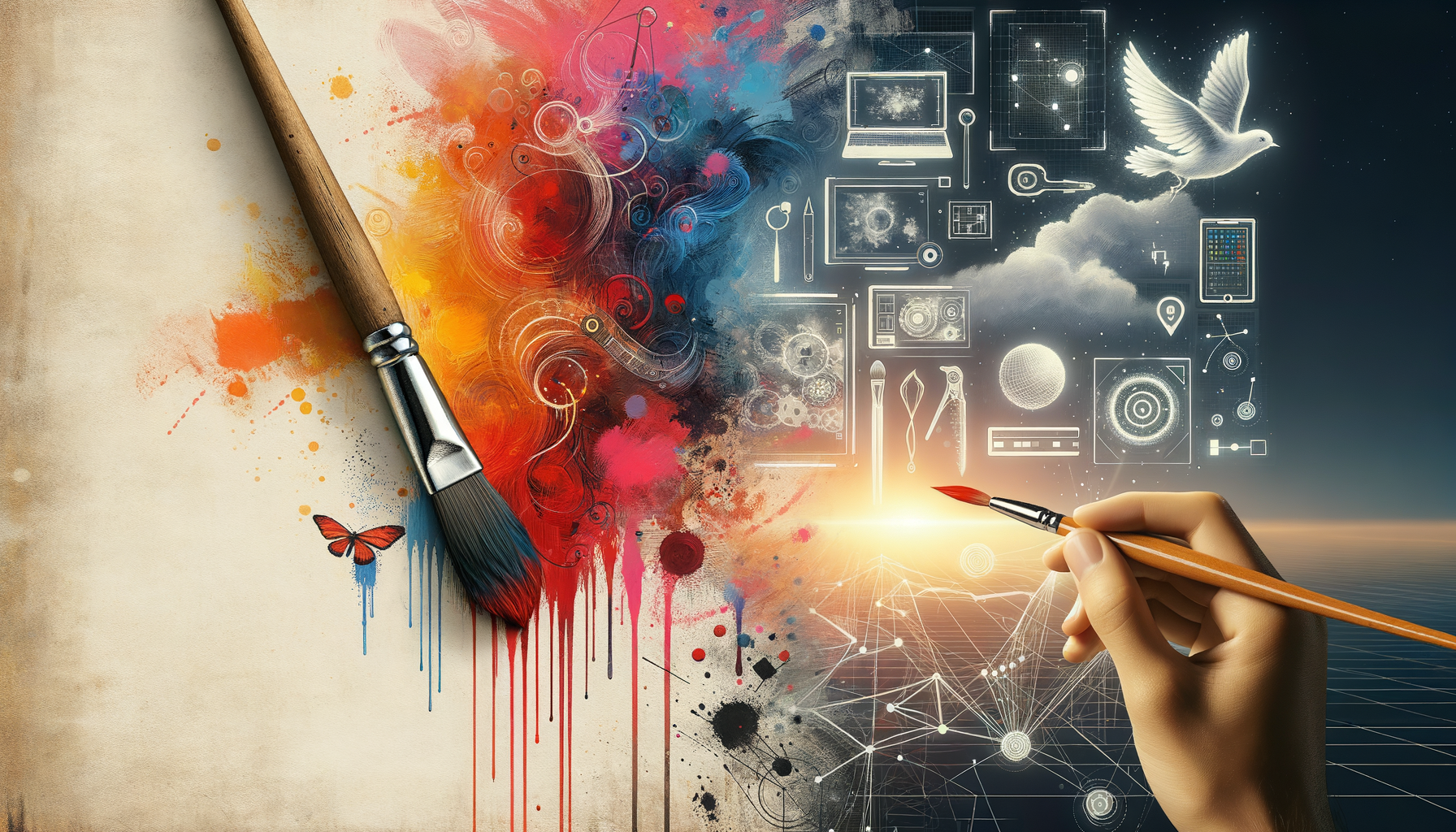
”Tech art” is a term that carries two entirely distinct definitions depending on which side of the digital divide you stand. In the entertainment industry, it represents the highly technical backbone of game development and visual effects (VFX). In the fine arts sector, it is a revolutionary medium powered by artificial intelligence, robotics, and interactive environments.
Understanding both spheres is critical to grasping the future of digital creation and the multi-billion-dollar economies funding it.
In digital media production, a natural tension exists: artists want to push aesthetic boundaries to make things look beautiful, while programmers need to maintain strict system performance so things run efficiently. The Technical Artist (TA) is the critical bridge who speaks both languages. They ensure that a director’s creative vision is actually possible within the mathematical limits of a game engine like Unreal or Unity.
Rather than painting textures or writing the core gameplay code, TAs manage the workflow and solve complex visual problems. Their day-to-day work usually involves rigging, which means taking a static 3D model and building a complex digital skeleton and control system inside it so the animation team can make it move naturally. They also build shaders by writing the math and small programs that dictate exactly how light interacts with surfaces – such as making a dragon’s scales look iridescent or ensuring a puddle reflects the sky correctly.
Optimization is another major focus, where they figure out how to manage memory and frame rates so a visually stunning environment can run smoothly. Poorly optimized digital assets can cause games to lag or crash, making mesh simplification and performance balancing a critical technical discipline. Additionally, they handle tool creation, writing custom scripts to automate repetitive tasks for the art team, saving hundreds of hours of manual labor.
The demand for this hybrid skill set is surging. Industry data highlights a massive growth rate in job postings for technical artists, as advanced game engine technology requires more specialists to bridge the gap between art and code. Outside of the gaming and film industries, “tech art” refers to a burgeoning fine arts movement where modern technology is the primary medium rather than just a production tool. Instead of canvas or clay, these artists use tools like generative AI, algorithmic code, robotics, and interactive sensors.
A prime example is the work of Refik Anadol, whose groundbreaking exhibition Unsupervised became the first to use generative artificial intelligence at New York’s Museum of Modern Art (MoMA). For this project, Anadol’s studio trained a machine-learning model on hundreds of thousands of images from MoMA’s collection. The result was a real-time artwork that continuously generated new, “hallucinated” visual forms based on live environmental inputs like changes in light, movement, and acoustic volume. In this discipline, the algorithm becomes a creative partner, exploring aesthetics that human minds might not conceive on their own.
Whether building tools for a game engine or exhibiting in global museums, the intersection of art and technology is highly lucrative. Technical Artists are uniquely valuable because finding a professional with a strong aesthetic eye who also understands vector math, topology, and coding is exceptionally rare. As interactive media continues to dominate the global entertainment sector, those who can master both the creative and technical pipelines are securing their place at the forefront of the modern digital economy.
