


Johannesburg: TECHz – News Desk
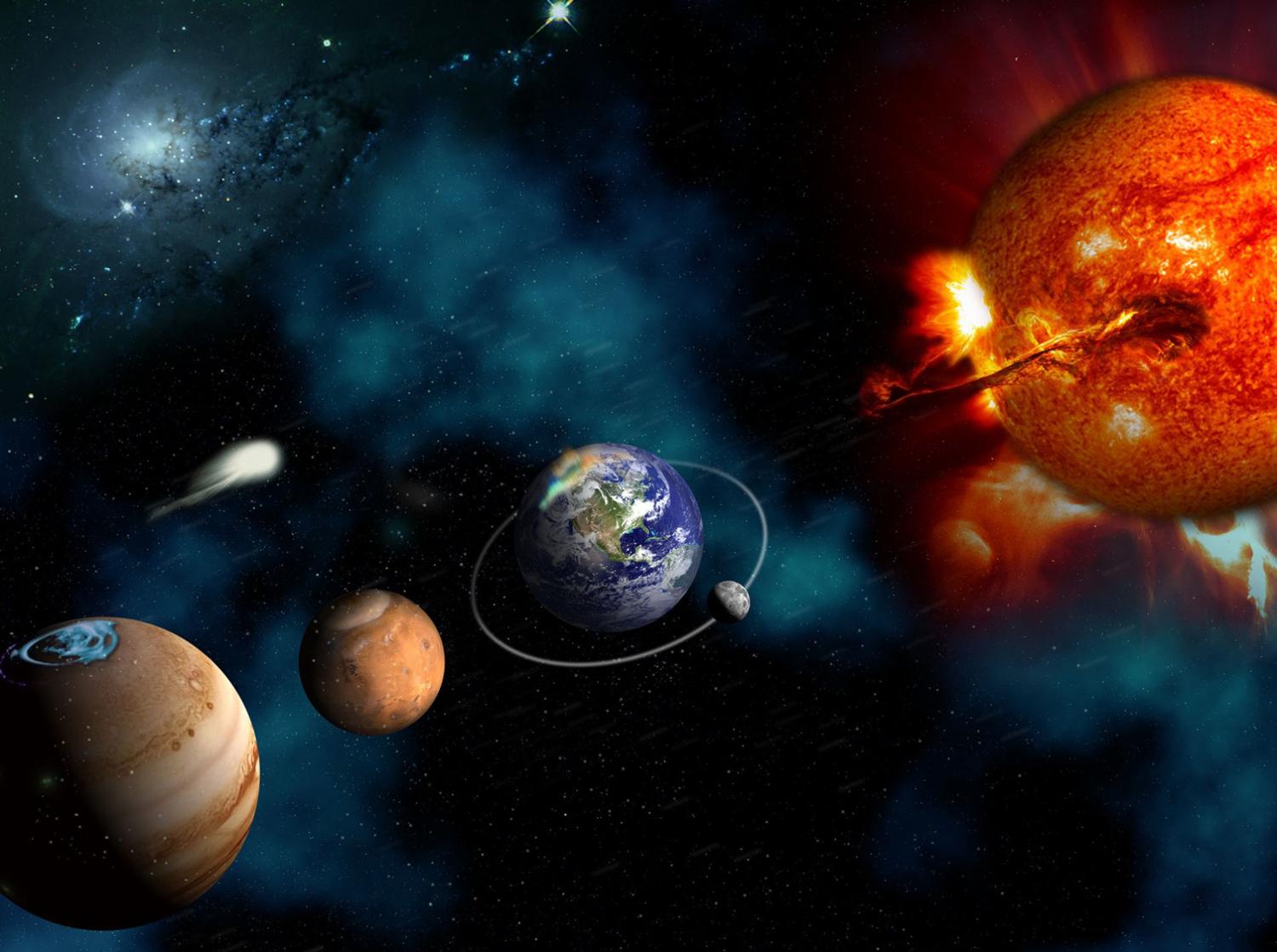
While Earth enjoys a quiet Sunday, the surrounding solar system is proving to be anything but calm. From a massive radiation surge striking the Red Planet to a silent giant gliding past Earth, today’s space weather reports highlight the sheer scale of the environment beyond our atmosphere.

The Red Planet Under Fire
New data released this weekend by the European Space Agency (ESA) has confirmed that Mars was recently battered by one of the most intense solar superstorms ever recorded. Using a coordinated “handshake” between two orbiting spacecraft – Mars Express and the ExoMars Trace Gas Orbiter – scientists captured the moment a solar eruption slammed into the Martian atmosphere.
Because Mars lacks a global magnetic field like Earth’s to deflect such hits, the results were dramatic:
• Atmospheric Swelling: The Martian ionosphere ballooned to nearly three times its normal density.
• Radiation Spike: In just 64 hours, onboard sensors recorded a radiation dose equivalent to 200 days of normal space travel.
These findings are more than just academic; they provide critical safety data for future manned missions. Understanding how much shielding a habitat requires to protect astronauts from such “solar tsunamis” is a primary hurdle for the first human footprints on Mars.
A Two-Million-Mile “Close Call”
Closer to home, NASA’s Jet Propulsion Laboratory (JPL) is currently tracking a significant near-Earth object as it makes its closest approach today, March 8.
The asteroid is passing at a distance of approximately 2,170,000 miles (roughly 3.5 million kilometers). While “two million miles” sounds vast, in the context of the solar system, it is a stone’s throw – about nine times the distance between Earth and the Moon.
NASA has confirmed the trajectory is entirely safe, but the flyby offers a golden opportunity for ground-based radar to ping the rock, helping astronomers refine its composition and orbital path for years to come.
The High-Tech Frontier
The news coincides with a surge in commercial space activity. SpaceX is currently eyeing a Falcon 9 launch window today to further expand the Starlink network, while Rocket Lab recently celebrated its 83rd successful mission.

As satellite technology becomes more integrated into our daily infrastructure – from monitoring the structural integrity of bridges to managing global energy grids – these cosmic events serve as a reminder that our digital world is increasingly tied to the unpredictable weather of deep space.
