


Alatau City: TECHz Magazine – News Desk
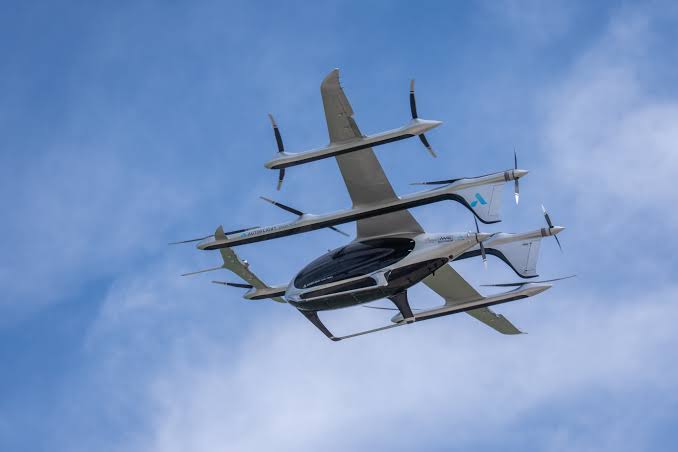
Kazakhstan has successfully conducted Central Asia’s first electric vertical takeoff and landing (eVTOL) demonstration flight in Alatau City. The V2000 Prosperity model, developed by Chinese manufacturer AutoFlight, completed a 10-minute unmanned test flight monitored from ground control.
This landmark event, spearheaded by the Alatau Advanced Air Group (AAAG) in collaboration with international partners, positions Kazakhstan at the forefront of the emerging urban air mobility sector. The push for urban air mobility is backed by substantial investments, with approximately €260 million projected for the development of infrastructure in Alatau City.
The first vertiport is currently under construction at the demonstration site and is slated to become the UAM Center Eurasia. AAAG has solidified its commitment by purchasing its first large-scale eVTOL from AutoFlight and signing a Memorandum of Understanding for an additional 50 units from the V2000 and V5000 series, which will eventually support low-altitude transport across the region.
The AutoFlight V2000 Prosperity is designed to carry one operator and up to five passengers, reaching maximum speeds of 200 km/h with a range of up to 250 km on a single charge. Powered by 13 electric motors, the aircraft requires about an hour to recharge and operates at a low noise level of under 70 decibels at a 100-meter distance. Its zero-emission electric propulsion makes it highly suitable for urban transit, and it is engineered to operate in extreme temperatures ranging from -20°C to 55°C.
To support this technological leap, the Mazhilis has adopted amendments to establish a legal framework for urban air mobility, introducing official guidelines for vertiports, flight zones, and unmanned traffic management. The government has mandated that the entirety of 2026 be dedicated to rigorous, unmanned testing across all four seasons. Drones will evaluate the impacts of heat, frost, wind, and magnetic fields on routes between Almaty airport, Konaev, and mountain resorts. If these trials meet safety standards, the first piloted passenger flights could launch as early as 2027, with Konaev identified as the likely starting point.
