


Kigali: TECHz – News Desk
The Food and Agriculture Organization of the United Nations (FAO), in partnership with the Smart Africa Secretariat, has officially launched the third edition of the Innovate Africa Challenge.
Designed to accelerate the deployment of artificial intelligence solutions, the 2026 initiative focuses on strengthening climate-smart agriculture and food security across the continent. Under the theme “From Ideation to Deployment,” this year’s challenge deliberately shifts away from recognizing theoretical concepts to focus entirely on scaling proven AI technologies capable of delivering measurable, real-world benefits to farmers.
African agrifood systems are currently confronting compounding pressures, including worsening climate shocks, declining natural resources, and fragmented agricultural data systems. To combat these hurdles, the winning solution will receive $50,000 in funding to facilitate practical field validation and widespread scaling. Implementation of the selected AI technology will be targeted across five Smart Africa member states, specifically Ghana, Kenya, Malawi, Rwanda, and Uganda. Deployment will be carried out in close collaboration with national agriculture ministries, ICT bodies, FAO country offices, and local innovation stakeholders.
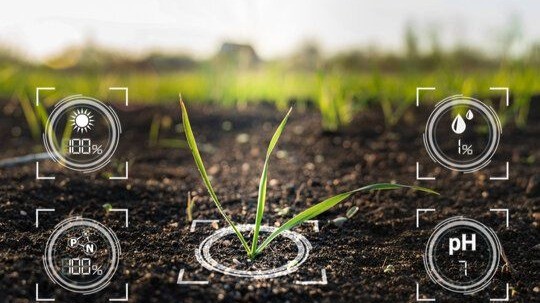
The 2026 challenge targets AI-driven innovations positioned between technology readiness levels three and six, spanning from pre-seed to Series A stages. The program seeks actionable solutions in priority areas including precision agriculture, adaptive decision-support systems, crop yield forecasting, pest and disease surveillance, and natural resource management. Crucially, the technologies must function seamlessly in rural, low-connectivity areas and integrate with existing national agricultural frameworks.
To be eligible, applicants must be legally registered start-ups operating within Smart Africa member states with a minimum of a two-person team. The initiative places a strong emphasis on responsible AI guidelines, requiring applicants to demonstrate transparency, minimize bias, and strictly protect farmer data privacy, while prioritizing platforms that serve smallholder farmers, women, and youth. Building on previous successes that deployed vital infrastructure like AI-powered weather stations, the FAO and Smart Africa aim to rapidly connect technology entrepreneurs with government policymakers to fortify food security across the continent.
