Kuwait: By Ashraf Gaber
While Western capitals launch initiatives and agencies to combat loneliness, spending billions on AI companions and high-tech assisted-living facilities for elderly citizens enduring “emotional poverty”, Kuwait has spent the past two decades testing an entirely different answer.
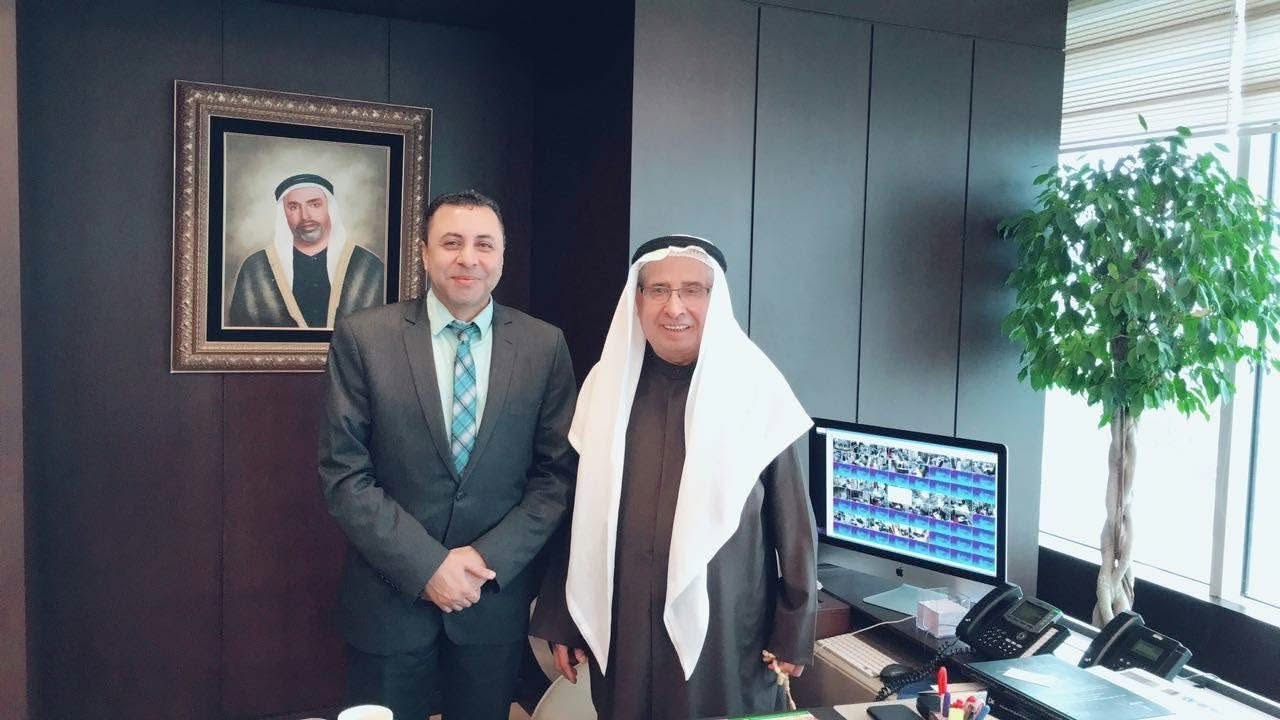
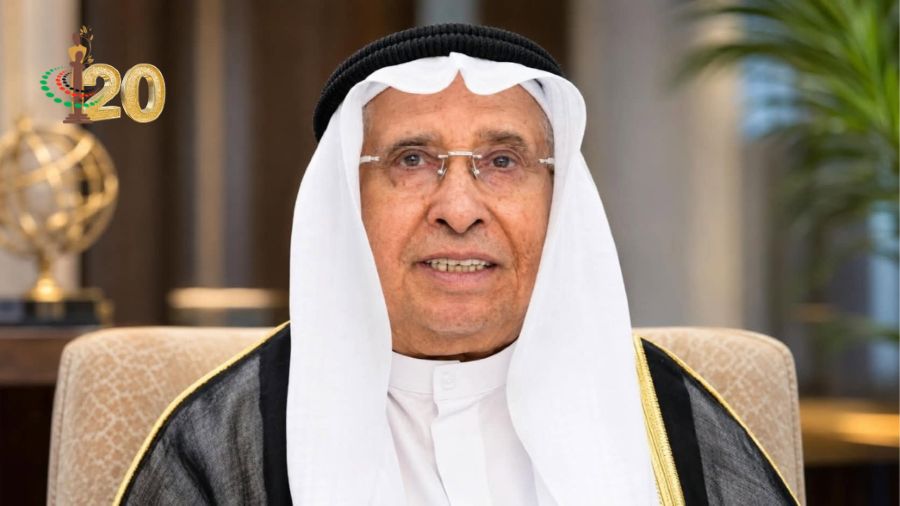
It is an answer that did not arrive through top-down government legislation or technological fixes, but emerged from the initiative of a Kuwaiti businessman who recognized early on that in an era of hyper-connectivity and relentless digital progress, the gravest threat facing contemporary societies is not a scarcity of resources, but the erosion of human memory within the family. He is Ibrahim Taher Al-Baghli, widely known across Kuwait and the Gulf as “Abu Raed,” whose flagship initiative, the Al-Baghli Award for the Benevolent Son (Al-Ibn Al-Barr Award), stands in 2026 on the threshold of its twentieth edition, having evolved from a personal patronage into a social school of thought drawing interest far beyond Kuwait’s geography, across both the regional and international arenas.
A closer reading of Al-Baghli’s career reveals that this project was no fleeting emotional impulse, but the continuation of a long-standing commitment to resisting forgetting. The businessman, who chairs the boards of diverse companies operating across the real estate, healthcare, security, and other sectors, is the very same figure behind the 1986 idea that created “Kuwaiti Sailor’s Day” (Yom Al-Bahhar), the heritage landmark through which Kuwaitis reclaimed the pulse of their maritime past before the pace of modernity could swallow it whole.
Nearly two decades after safeguarding the memory of the sea, Abu Raed turned his attention in 2007 to safeguarding society’s “living memory”, its parents and elders, launching the Benevolent Son Award under his personal sponsorship and striking a deeply sensitive social chord.
From Personal Gesture to a Permanent Civic Framework
Yet the defining difference between a seasonal charitable gesture that fades with time and a project that endures for twenty years without losing its vitality lies in an “institutional mindset.” Here, Al-Baghli drew upon his executive acumen to re-engineer civil society work. In 2013, the individual dream became a firmly anchored legal entity with the official chartering of the Ibrahim Taher Al-Baghli Foundation for the Benevolent Son, under Ministerial Decree No. 236/A issued by the Ministry of Social Affairs and Labor. Rather than remaining an isolated island, the foundation integrated into a comprehensive ecosystem led by Al-Baghli himself through his chairmanship of the Kuwait Charity Society for the Care and Rehabilitation of the Elderly, alongside his longstanding support for volunteerism and the scouting movement. This deliberate intersection, bridging the energy of youth in scouting and volunteer fields with the needs of seniors within the society and foundation, reflects a vision that refuses to segregate generations into distant islands, working instead to reintegrate the elderly into the heart of public life rather than relegating them to its margins.
From Family to Nation: Weaving Filial Devotion into Public Culture
What proved sharpest about the award’s design was its ability to sidestep the trap of direct preaching, an approach that often alienates younger generations, betting instead on “soft power” and genuine partnerships with state institutions and civil society associations. Thus, the value of filial devotion wove itself through arts and literature into the fabric of everyday Kuwaiti life. In schools, in close coordination with the Ministry of Education, students began discovering the meaning of honoring their parents while crafting a short story, composing a verse of poetry, or painting a canvas to enter the award’s competitions. On the professional creative front, the foundation opened its doors to photographers and cartoonists in cooperation with their specialized associations, while attracting television drama and radio producers to translate authentic Islamic and societal values into living visual and audio scenes that resonate in the public conscience.
At the heart of this cultural movement, the Benevolent Son Award has preserved its highest humanitarian luster, spotlighting ordinary individuals who set extraordinary examples in serving their parents and caring for seniors, alongside honoring national figures under the title “Benevolent Sons of Kuwait,” in a tradition that binds devotion to family with devotion to the nation.
Exporting Moral Security: A Model Beyond Kuwait’s Borders
As the award reaches its twentieth year, Ibrahim Al-Baghli’s experience is no longer a purely local affair; it carries growing weight on both the regional and international stages. Across the Gulf and the wider Arab world, the foundation offers a mature, practical lesson in redefining corporate social responsibility, lifting it out of the cycle of fleeting promotional sponsorships and into the horizon of long-term investment in moral capital. It proves that an organic partnership between business leaders and state institutions can fortify the social fabric against successive urban and economic shifts. It is a civic blueprint ripe for inspiration and adoption across numerous Arab capitals grappling with the exact same familial challenges.
On the international stage, the initiative holds extraordinary relevance amid the demographic crisis gripping advanced industrial societies. As aging populations and fraying family bonds deepen, these societies are discovering too late that luxury care facilities and advanced medical services cannot compensate a human being for family warmth and a sense of dignity. Into this global humanitarian void, the Benevolent Son Award puts forward an alternative civilizational paradigm, rooted in Islamic and Arab ethical values, yet converging at its core with the latest international human-development trends calling for a shift from “sheltering the elderly” to “integrating and honoring them within their families and communities.” In doing so, Al-Baghli adds a distinctive new dimension to the humanitarian diplomacy for which Kuwait is known worldwide: a diplomacy that does not stop at disaster relief, but exports to the world an inspiring model of “moral security and intergenerational solidarity.”
Four decades after reviving “Kuwaiti Sailor’s Day” and two decades after founding “The Benevolent Son,” Ibrahim Taher Al-Baghli’s project reads like a quiet civilizational manifesto in a noisy, unsettled world, a reminder to capitals near and far that the true measure of a nation’s progress is not the height of its towers or the scale of its economies, but its ability to uphold the dignity of those whose hair turned gray while laying its very first stones.