The next major leap is not inventing another sensor or app, but uniting existing technologies into a single “nervous system” that shifts agriculture from managing scarcity to engineering abundance. Imagine a bodybuilder who spends years sculpting a massive chest and arms while completely neglecting his legs.
Capt. Osama El-Nemr, Master Mariner
From a distance, he looks unstoppable, yet the heavier the upper body grows, the more that neglected foundation threatens to buckle. This image captures our modern dilemma: humanity has built an extraordinary technological upper body powered by artificial intelligence, continuous camera surveillance, orbital satellites, and smart mobile apps. Still, economic reality poses an unavoidable question: we cannot eat technology, energy, or financial wealth, so are we deploying enough of this power to reinforce the systems that keep us alive?
Integration, Not Invention
Agriculture remains a high-risk sector shaped by volatile weather, disease, water scarcity, fluctuating input costs, labor shortages, and operational errors that often go unnoticed until the financial damage is irreversible, a reality that keeps many investors cautious. The solution is not simply injecting more capital, but re-engineering agricultural investment so it becomes measurable, integrated, and repeatable. The growing focus of tech pioneers, most notably Bill Gates, through his extensive investments in farmland, agricultural technology, and veterinary systems, underscores that technology and agriculture are no longer competing visions, but twin pillars of a shared future.
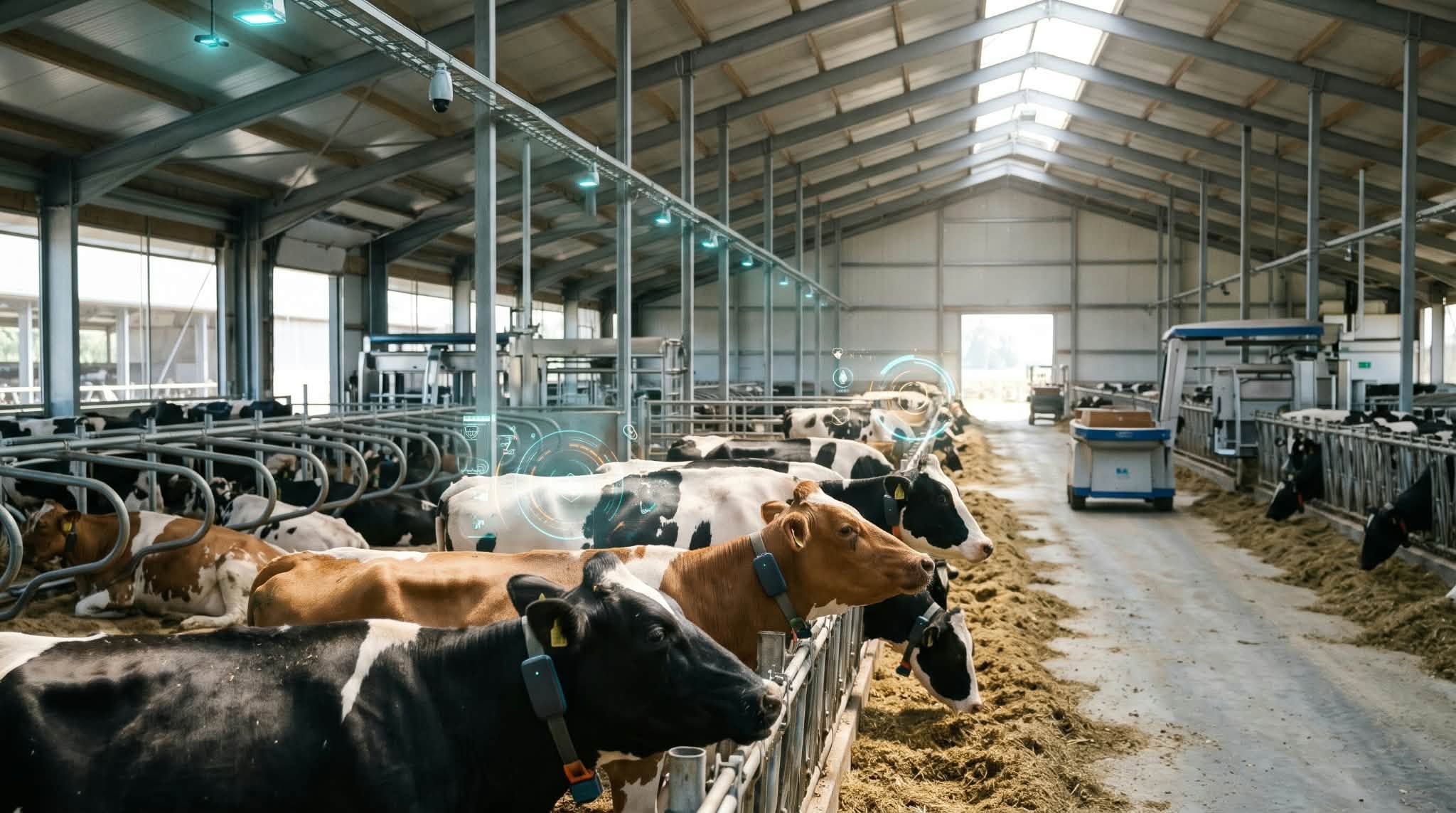
Biometric sensors and real-time data transform livestock management from delayed reaction into preventive precision. (Photo: TECHz AI Team)
“Putting sensors into a badly organised farm does not create smart agriculture. It creates a badly organised farm with sensors.” – World Bank warning on digital agriculture
The required tools already exist, yet the real gap lies in dismantling the isolated silos separating crops, feed, livestock, logistics, and markets, and merging them into one unified digital environment:
Cameras see and sensors measure: Continuous monitoring tracks animal health, behavior, facility conditions, and feed and water consumption.
Systems remember and AI analyzes: Operational data feeds into enterprise resource planning (ERP) platforms to detect subtle anomalies early.
Apps alert in real time: Actionable insights reach the right decision-maker at the exact moment needed, long before monthly losses compound.
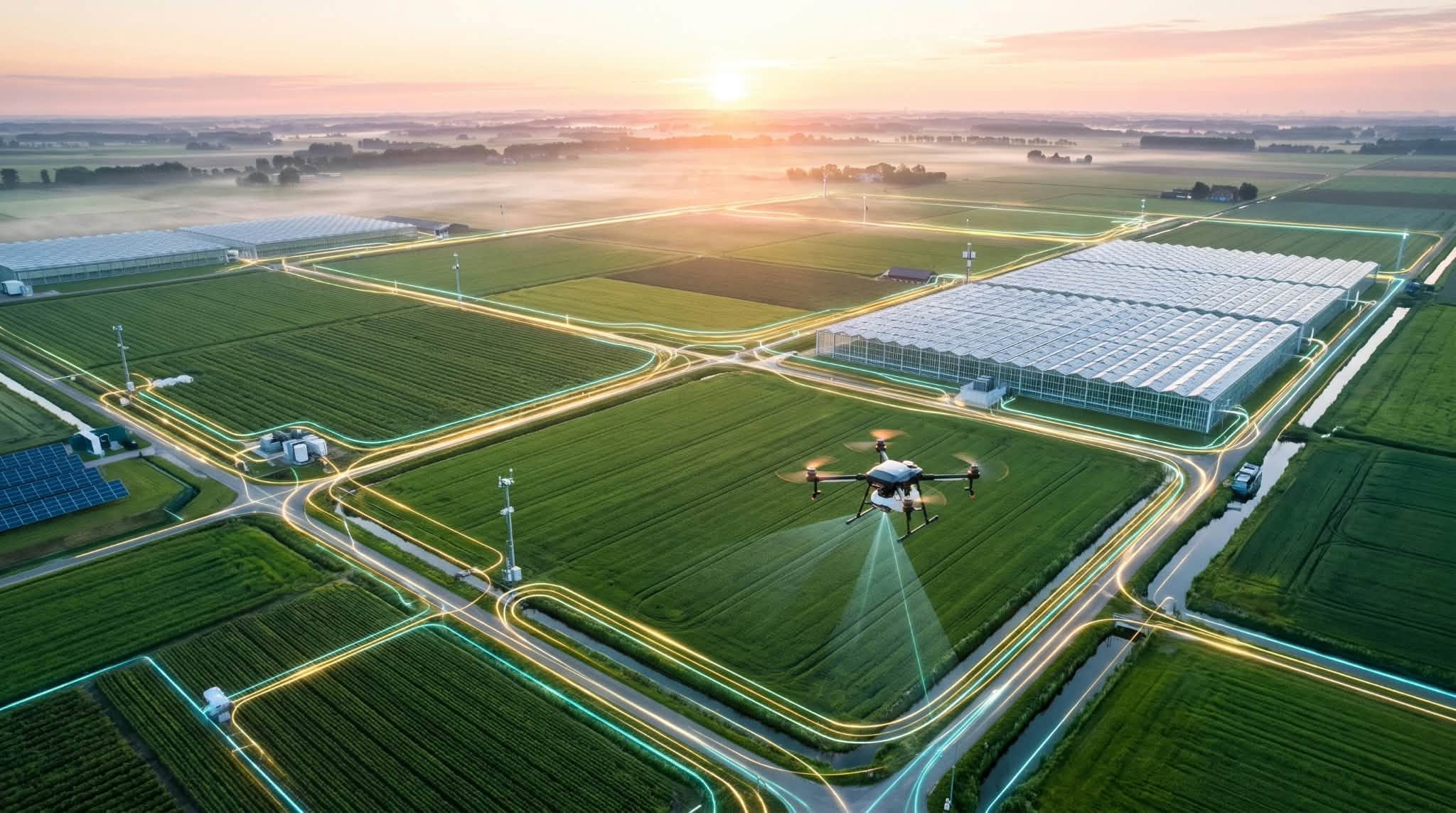
When technology acts as a unified “nervous system,” connecting fields and resources into an ecosystem engineered for abundance. (Photo: TECHz AI Team)
The Economics of Precision and Education as Infrastructure
To grasp the cost of imprecise management, consider a measurable module of 100 animals: losing just 100 grams of daily weight gain per animal equals 10 kilograms lost per day across 100 head, 100 kilograms across 1,000, and a staggering one metric ton of live weight lost every single day on a 10,000-head farm. Scale amplifies success, but it amplifies mistakes at the exact same rate, making the golden rule clear: measure, learn, standardize, and replicate.
Yet algorithms cannot educate themselves; a sensor flags an abnormality and AI recommends an action, but human expertise must interpret and judge both. That makes education core infrastructure, starting with connecting school curricula and interactive games to smart farming, robotics, and drones, much like America’s century-old 4-H program, to rebuild societal respect for the people who feed the world.
Toward Engineering Abundance
The next breakthrough will not be a standalone gadget, but a cohesive ecosystem where technology serves as the nervous system, agriculture as the productive body, education as the engine of capability, culture as the source of respect, and management as institutional memory. By channeling a fraction of our technological muscle into strengthening the legs that carry civilization, food security can evolve from a defensive struggle against scarcity into a deliberate path toward abundance.