


Johannesburg: TECHz – News Desk
As of February 2026, IBM has solidified its position as the leader in “Utility-Scale” quantum computing. The company’s strategy has shifted away from simply chasing high qubit counts to a rigorous, verified pursuit of Quantum Advantage – the point where a quantum system performs a task significantly better, faster, or cheaper than any classical supercomputer.

The Hardware Frontier: Nighthawk and Heron
IBM’s current fleet is anchored by two critical generations of processors that are currently accessible via the IBM Quantum Platform:
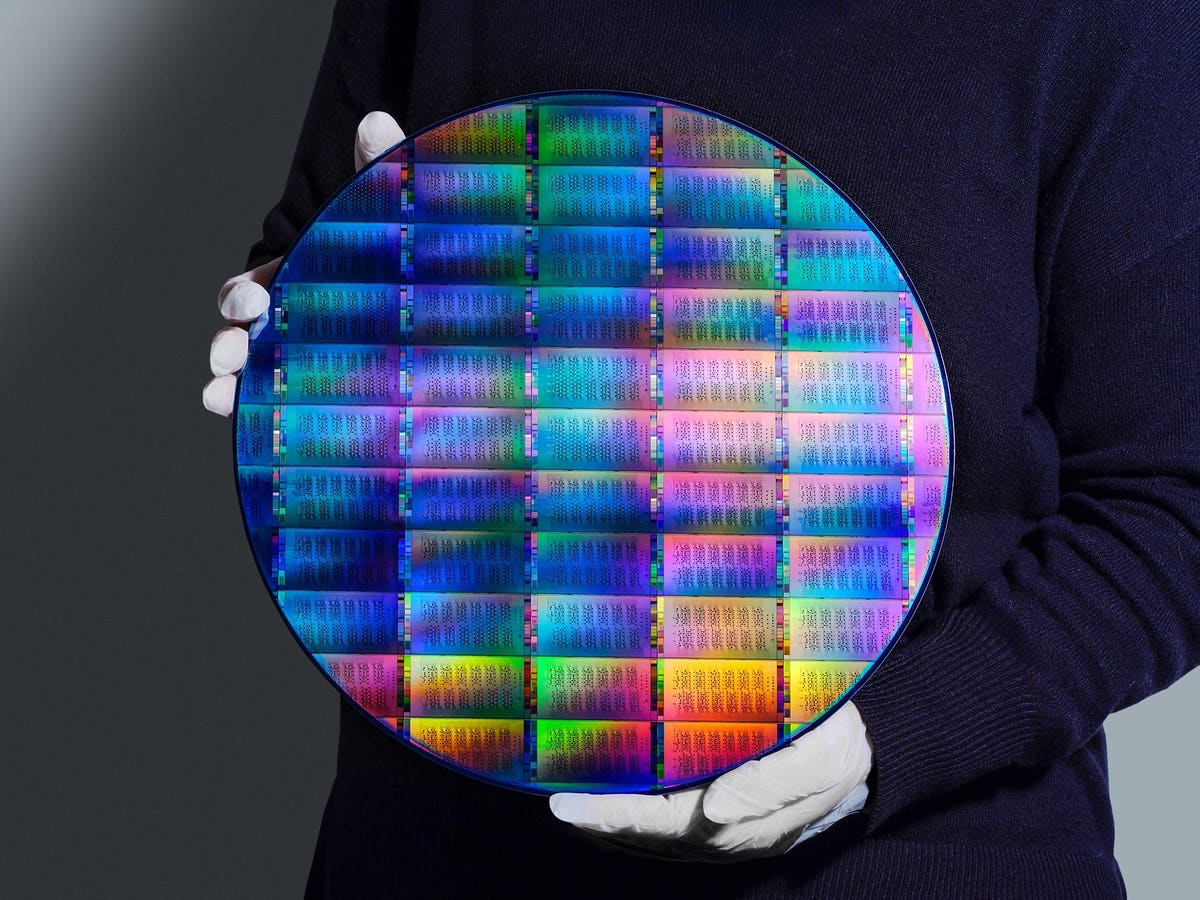
• IBM Quantum Nighthawk: Released for early cloud access in January 2026, this is currently IBM’s most advanced processor. It features 120 qubits arranged in a square lattice. While the qubit count is lower than the older 1,121-qubit Condor, Nighthawk focuses on quality over quantity. It boasts a median coherence time (T1) of 350 microseconds and a 20% increase in inter-qubit connectivity, allowing for circuits that are 30% more complex than previous generations. • IBM Quantum Heron (r3): This remains the “workhorse” of IBM’s premium fleet. Recent benchmarks in February 2026 show that Heron has reached error levels below 1e-3 (0.1%) on over a third of its two-qubit gates, providing the stability needed for scientific research.
The Path to “Quantum Advantage” by December 2026:
IBM has publicly committed to a deadline: the end of 2026 for the first verified instances of quantum advantage. Rather than making a solo claim, IBM is working with a global network of partners to prove this through peer-reviewed research.
• Verified Simulations: Partners like Boeing, RIKEN, and the Cleveland Clinic are currently using IBM systems to simulate material science and molecular dynamics. The goal is to solve “hard” physics problems that current supercomputers can only approximate.
• Algorithmic Benchmarking: IBM’s 2026 roadmap targets the ability to reliably execute circuits with up to 7,500 two-qubit gates. Crossing this threshold is considered the “tipping point” where quantum utility becomes a tangible business advantage.
Infrastructure: IBM Quantum System Two:
To house these advancing chips, IBM has deployed Quantum System Two, a modular cryogenic platform. This architecture is designed for “Quantum-Centric Supercomputing,” where quantum processors (QPUs) are linked directly to classical CPUs and GPUs.
• Global Expansion: In February 2026, construction began on the Quantum Valley Tech Park in Andhra Pradesh, India, which will host one of the first international System Two installations.
• Future Scaling: The System Two framework is built to support the upcoming Kookaburra processor, a multi-chip module expected later in 2026 that aims to link multiple processors to reach a combined count of over 4,000 qubits.
