


Cape Town: TECHz – News Desk
The City of Cape Town’s Urban Mobility Directorate, in partnership with the University of Cape Town (UCT), will begin a major research project in the coming months to assess how electric buses can be integrated into the City’s MyCiTi bus service. The initiative aims to test the operational performance of electric buses (e-buses) before a broader fleet rollout.

The research is funded by the City of Cape Town and supported through a grant from the Urban Electric Mobility Initiative (UEMI). The project can now proceed following approval by the Mayoral Committee, allowing the City to sign an agreement with the eBRT2030 Consortium, UEMI’s implementing agent.
The City and UCT secured a EUR90 000 grant from eBRT2030 to support the MyCiTi electric bus project. This funding is supplemented by a City contribution and will be used to study the operational impact of e-buses ahead of their planned deployment along the metro-south east corridor in the 2027/28 financial year.
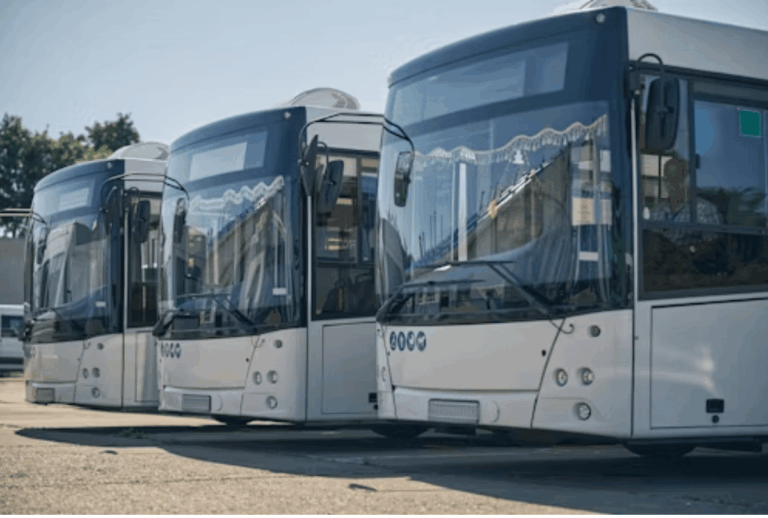
Up to four 12-metre electric buses will be used during the research phase and deployed across various MyCiTi routes in Cape Town. The first bus is expected to arrive in the first quarter of the new financial year, pending final arrangements. Over a period of approximately 12 months, the buses will be tested on as many existing routes as possible to evaluate performance under different conditions. Areas of study include battery range after charging, charging times, the effect of passenger volumes, route profiles, and climate on battery discharge.
Maintenance and operational costs will also be closely monitored. International experience suggests electric buses could reduce operating costs by as much as 70% compared to conventional fleets.
Rob Quintas, Mayoral Committee Member for Urban Mobility, City of Cape Town: “We are grateful that the Mayoral Committee has given us the go ahead to sign the agreement with the eBRT2030 Consortium to participate in this programme. The research is critical as we need to understand how the electric buses will perform in our local context, and what challenges we need to take into account before we roll-out the e-bus fleet in 2027. All of this information will assist us in planning better, and to be prepared in terms of the logistics and other needs such as the training of the bus drivers, maintenance requirements, passenger loads, fault reporting, and so forth. In fact, all over the world, countries undertake a pilot before the roll-out their e-fleet. UCT is our partner in this. They will lead the feasibility study and research components of the eBRT2030 project, as well as the additional monitoring and evaluation. We get the benefit of the research and we can then apply the outcomes in our planning.”
The City will sign the grant agreement with UEMI, which acts on behalf of eBRT2030. The programme is funded by the European Union under the Horizon Europe framework. The research project is scheduled to run until at least December 2026 and could be extended to June 2027, subject to UEMI approval.
Cape Town plans to roll out its electric bus fleet along MyCiTi routes in the metro-south east, including new services under Phase 2A. The first e-buses are expected to begin operating by 1 July 2027, transporting passengers between Mitchells Plain and Khayelitsha, Wynberg and Claremont, as well as the Cape Town CBD.
