


Johannesburg: TECHz – Anita Bosman
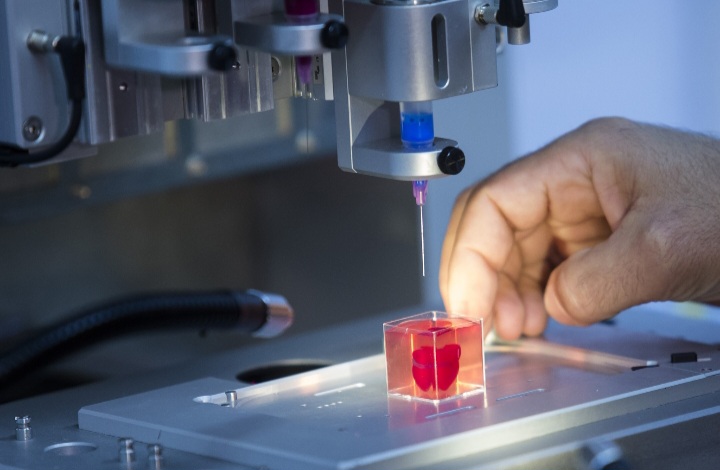
In 2019, researchers at Tel Aviv University unveiled a scientific milestone: the first 3D‑printed vascularized human heart created entirely from a patient’s own cells. The organ, though only the size of a rabbit’s heart, contained chambers, blood vessels, and could contract autonomously. It was hailed as a glimpse into a future where organ transplants might no longer depend on donors or risk rejection. Six years later, the promise remains powerful, but the journey toward a fully transplantable human heart is still unfolding.

By 2025, laboratories around the world have advanced the science of bioprinting in remarkable ways. Patient‑specific cardiac patches are now being tested to repair damaged tissue, and miniature beating hearts are used by pharmaceutical companies to model disease and test drugs safely. Progress in vascularization has allowed printed tissues to survive longer, with capillaries and microvessels delivering nutrients more effectively. Yet scaling up from small prototypes to a full‑sized human heart remains the greatest challenge. Printed hearts can beat, but they cannot yet pump blood with the strength and rhythm required to sustain life.
Global research hubs continue to push boundaries. Tel Aviv University refines its bio‑inks and vascular printing methods, while institutions like Harvard and MIT work on integrating electrical signaling to mimic natural heart rhythms. European teams experiment with hybrid scaffolds and AI‑guided printing, and Asian research centers invest heavily in infrastructure to accelerate clinical trials. Despite these advances, no printed heart has yet been approved for human transplantation.
The ethical and regulatory landscape is equally complex. Questions of safety, long‑term biocompatibility, and equitable access remain unresolved. Bioprinting is expensive, and early applications will likely be limited to wealthy institutions and patients. At the same time, the technology raises profound questions about how society defines life and regulates organs that are manufactured rather than donated.
Looking ahead, scientists anticipate pilot animal trials of partially functional printed hearts within the next few years, with human trials likely beginning in the early 2030s. The long‑term vision is clear: fully transplantable, patient‑specific hearts produced on demand, eliminating donor shortages and rejection risks. For now, the printed heart remains a symbol of possibility – a beating prototype that reminds us how close science is to reshaping the future of medicine.
