


Johannesburg: TECHz – News Desk
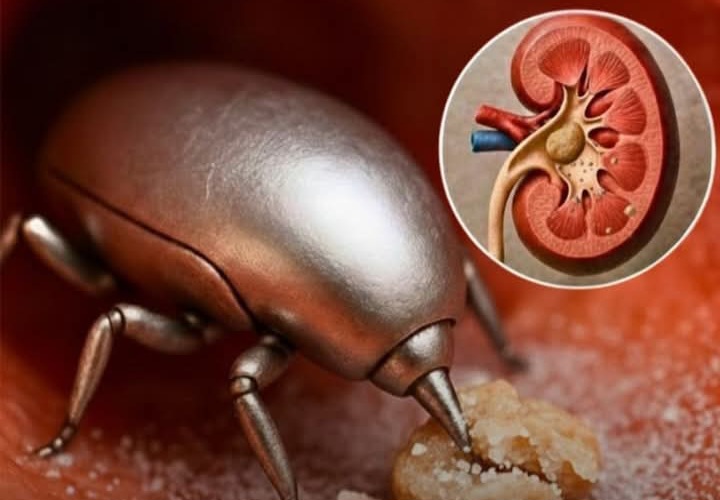
On August 12, 2025, researchers at the University of Waterloo in Canada unveiled a groundbreaking medical innovation: a rice-sized magnetic robot capable of dissolving kidney stones without the need for surgical intervention. This soft robotic device, composed of hydrogel strips embedded with magnetic particles, is designed to navigate the urinary tract and deliver targeted enzyme therapy directly to uric acid stones.
Guided by an external magnetic field and robotic arm, the robot administers urease, an enzyme that raises urine pH and facilitates stone dissolution. In controlled laboratory trials using life-sized 3D-printed urinary tract models, the robot achieved up to 30% stone reduction within five days.
What makes this breakthrough especially compelling is its potential to transform patient care. Traditional treatments like shockwave lithotripsy or surgery often involve pain, anesthesia, and lengthy recovery. By contrast, this tiny robot offers a minimally invasive solution that could one day allow patients to avoid hospital stays altogether.
The latest update, published on August 22, 2025, confirms the robot’s precision, safety, and effectiveness in simulated anatomical environments, marking a significant leap forward in soft robotics and non-invasive urological care.
This innovation not only highlights Canada’s leadership in medical robotics but also opens the door to a future where microscopic machines may routinely travel inside the human body, repairing and healing without a single incision.
