


Titusville: TECHz – Anita Bosman
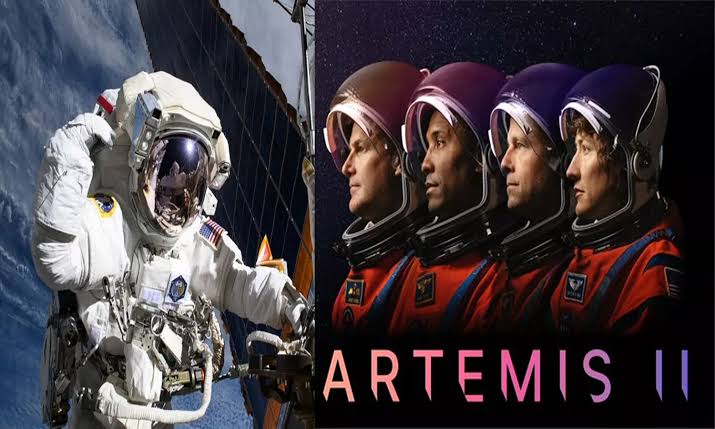
In a year poised to redefine humanity’s relationship with the cosmos, 2026 stands out as a pivotal moment, primarily due to NASA’s ambitious Artemis II mission. Slated for launch in March 2026, this crewed lunar flyby represents far more than a nostalgic return to the Moon; it’s a critical stress test of the technology and human endurance required for sustained lunar presence and, ultimately, the journey to Mars.

The Mission – Pushing the Boundaries:
Artemis II will see a four-person international crew embark on a daring 10-day “hybrid free-return” trajectory. This mission profile will take the astronauts approximately 7,600 kilometers (4,700 miles) beyond the lunar far side, reaching an astonishing 400,000 kilometers (250,000 miles) from Earth – further than any human has ever traveled.
The crew for this historic journey includes Commander Reid Wiseman, Pilot Victor Glover (marking a significant milestone as the first person of color on a lunar mission), Mission Specialist Christina Koch (the first woman to venture to the Moon), and Jeremy Hansen (the first Canadian astronaut to undertake a lunar mission). Their collective experience and diverse backgrounds underscore the global collaborative spirit of modern space exploration.
The primary objective of Artemis II is to thoroughly test the integrated systems of the Space Launch System (SLS) rocket and the Orion spacecraft with humans on board. This includes evaluating critical life support systems, communication relays, and propulsion capabilities under real-world deep-space conditions.
Technological Marvels at Play:
The success of Artemis II hinges on the sophisticated interplay of several cutting-edge technologies, each representing a significant leap forward in space engineering:
• The Space Launch System (SLS) – Humanity’s Deep-Space Workhorse:
The SLS, standing at a towering 98 meters (322 feet), is the most powerful rocket currently certified for human deep-space travel. Generating an immense 39.1 meganewtons (8.8 million pounds) of thrust, it represents a substantial upgrade from the Apollo-era Saturn V. For Artemis II, the SLS will perform its crucial role of safely propelling the Orion capsule and its crew beyond Earth’s orbit and on its trajectory towards the Moon. The 2026 launch will be the first time the SLS carries a human crew, validating its performance and safety margins.
• The Orion Spacecraft – A Habitable Oasis:
The Orion capsule, proven robust during the uncrewed Artemis I flight in 2022, will be fully equipped for human habitation in 2026. Its Environmental Control and Life Support System (ECLSS) is designed to meticulously manage oxygen, nitrogen, and water recycling, creating a stable and breathable environment for four astronauts in a volume roughly comparable to a small RV.
Upon its return, Orion will endure an extreme re-entry into Earth’s atmosphere, blazing at speeds up to 40,000 km/h (25,000 mph). Its advanced heat shield is engineered to withstand temperatures soaring to 2,760°C (5,000°F), safeguarding the crew during this fiery descent.
• Optical Communications (O2O) – Bridging the Lunar Distance:
A revolutionary feature of Artemis II is the deployment of the Orion Artemis II Optical Communications System (O2O). This technology utilizes infrared lasers instead of traditional radio frequencies for data transmission, promising a dramatic increase in communication bandwidth. With speeds up to 260 Mbps, O2O will enable the first-ever live 4K video streams from the vicinity of the Moon, offering unprecedented real-time insights into the mission for audiences back on Earth.
2026 – The Gateway to a Lunar Future:
While Artemis II itself won’t involve a lunar landing, its success is paramount. It serves as the final qualification test for Artemis III, the mission planned to return humans to the lunar surface. Simultaneously, 2026 is also a critical year for SpaceX, which is expected to conduct vital on-orbit refueling demonstrations for its Starship vehicle. Starship is slated to eventually serve as the human landing system for future Artemis missions, including Artemis III.
The confluence of these missions and technological advancements firmly establishes 2026 as a “gateway year” for deep-space exploration. It solidifies humanity’s resolve not just to visit the Moon, but to establish a sustainable presence, paving the way for the next giant leap – the journey to Mars.
